What the chief stewardess actually does
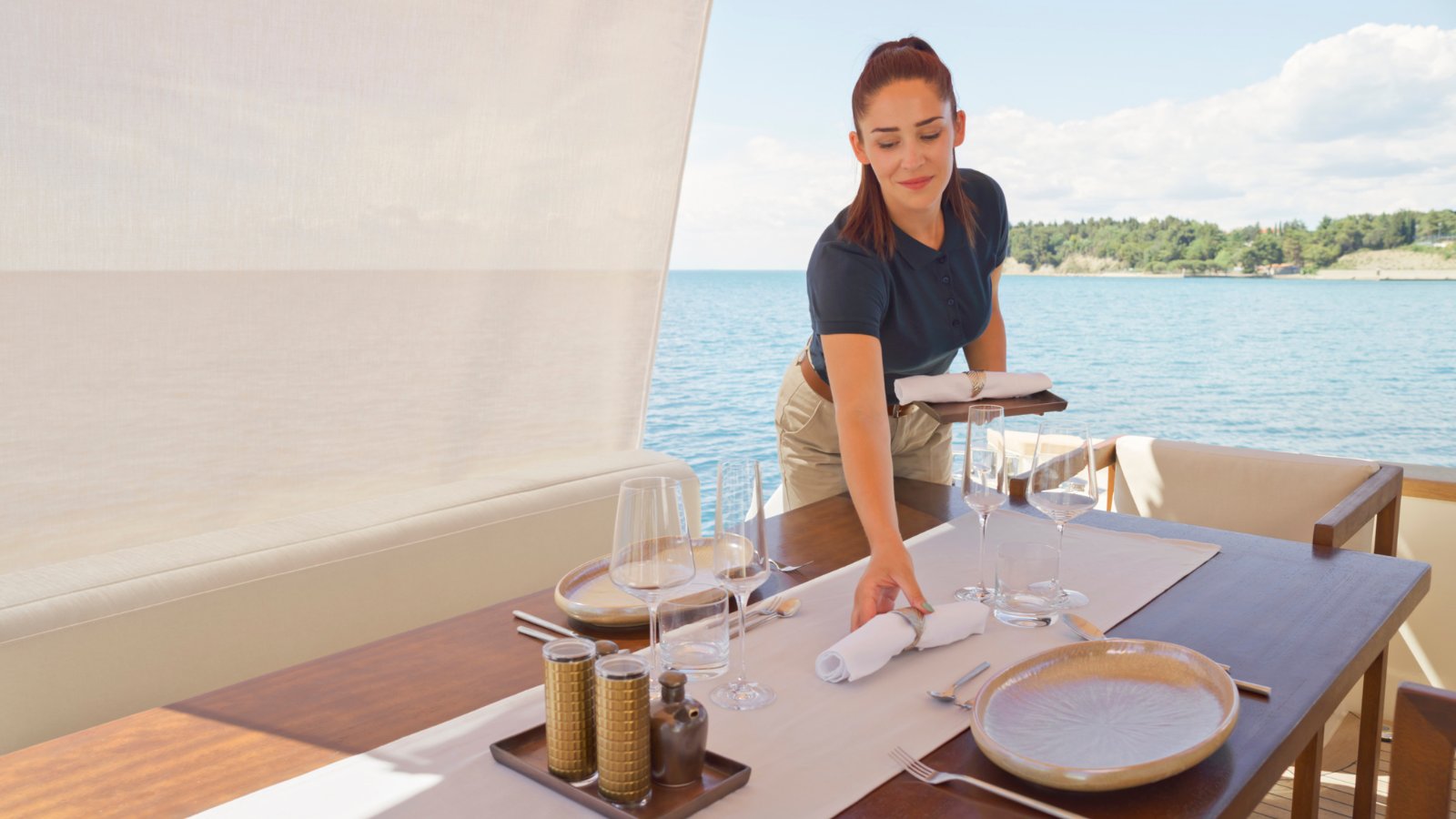
The chief stewardess (or chief stew, or on larger vessels, Purser) is responsible for everything the guests experience inside the yacht. Accommodation standards, meal service, housekeeping, guest preferences, cabin turnover, laundry, flower arrangements, guest management, crew management — it all sits in the chief stew's department.
On a 50m charter yacht running 25 weeks a year, the chief stew is managing a rotating cast of high-net-worth guests with exacting standards, a team of 2–4 stewardesses, a detailed preference system built from pre-charter questionnaires, and all of it in a vessel that might be in a different port every night. It's genuinely demanding work.
Key responsibilities:
- Guest management: pre-charter questionnaires, preference tracking, guest communication
- Table service: silver service, formal service, wine service, cocktail preparation
- Cabin management: turndown, housekeeping standards, laundry, flower arrangements
- Interior team management: scheduling, standards, training junior stews
- Provisioning and stores: ordering consumables, toiletries, florals, beverages
- Budget management: tracking provisions spend against charter revenue
- Working alongside the chef on menu timing and service flow
On larger vessels (60m+), the chief stew has a deputy (2nd stewardess or purser assistant) and may be managing 4–6 interior staff. At this scale the role becomes almost entirely managerial — she's rarely setting a table herself.
The interior department hierarchy
Junior Stewardess → Stewardess → Senior Stewardess / 2nd Stewardess → Chief Stewardess / Purser.
Unlike the deck department, there's no formal MCA certification ladder for interior. Progression is experience and reputation-driven — the chief stew on a 65m is there because she's genuinely the best person for the job, not because she passed a specific exam.
That said, specific qualifications do make a material difference to both employability and earning potential.
How long does it take to reach chief stew?
The range is wide: 2–5 seasons, depending heavily on vessel size, your background, and which qualifications you accumulate. Stewardesses with hotel management or luxury hospitality backgrounds move faster. Those starting from scratch with just STCW may take 3–4 seasons to be genuinely chief stew material.
The fastest route is working on larger charter vessels where you get maximum exposure to high-pressure guest service, formal service techniques, and team management — and then networking your way into the right opportunity when the timing is right.

Qualifications that accelerate progression
While there's no mandatory certificate for chief stew, these qualifications are genuinely valued and regularly listed in job ads:
| Qualification | What it adds | Priority |
|---|---|---|
| STCW BST | Legal baseline — mandatory for all commercial crew | Essential |
| ENG1 Medical | Required for commercially coded vessels | Essential |
| WSET Level 2 (Wine) | Credible wine service knowledge; valued on formal dining programmes | High |
| WSET Level 3 (Wine) | Advanced wine knowledge; distinguishes you at chief stew level | High (senior level) |
| Silver service training | Formal plated and guéridon service; expected on larger yachts | High |
| IAMI GUEST Superyacht Hospitality | Industry-specific hospitality certification covering all aspects of stew work | High |
| MCA Hospitality module | Formally recognised maritime hospitality certificate | Useful |
| Floristry / flower arranging | Specific skill valued on high-end programmes; demonstrably rare | Differentiator |
| Languages | Russian, Arabic, Mandarin — opens doors on specific charter markets | High value on right boats |
| HACCP food hygiene | Required to assist in galley; useful for provisioning roles | Useful |
The reputation factor
More than almost any other role in yachting, chief stewardess positions are filled by reputation and recommendation. Captains and owners on large yachts don't trawl job boards for their chief stew — they ask other captains and owners who they'd recommend. This means that how you work, how you treat your crew, and how well-connected you are in the yachting community matter enormously.
Be a stewardess other people want to work with. Be someone captains mention when asked. When an opportunity arises, you want your name to come up naturally — not just when you've submitted a cold CV.
Interior to purser: the senior path
On very large yachts (80m+), the senior interior role is often "Purser" rather than chief stewardess. The purser manages a much larger interior team, handles a substantial provisioning and crew budget, manages crew welfare and administration, and is effectively a hotel general manager at sea. Purser-level salaries can reach $8,000–$12,000/month on the right vessel — comparable to a chief officer.
The purser path is specialist and not suitable for all chief stews — it requires genuine financial and administrative capability on top of hospitality excellence. But for the right person, it's the highest level the interior department reaches.